The UK higher education sector is becoming increasingly cautious about international student recruitment as universities face stricter compliance requirements and greater scrutiny over the students they sponsor. For Nigerian students planning to study in the UK, recent decisions by some universities to pause applications, restrict CAS issuance, or introduce additional screening have raised concerns about UK universities stopping sponsorship for Nigerian students. However, it is important to understand what these changes actually mean.
The recent actions taken by individual universities do not represent a blanket ban on Nigerian students studying in the UK. Instead, they reflect a wider environment in which universities are becoming more careful about international recruitment as the UK Government strengthens the compliance requirements placed on Student sponsors. If you are planning to study in the UK, understanding these changes can help you make better decisions about your university application, deposit, CAS, and visa process.
Why Are UK Universities Becoming Stricter?
Universities that sponsor international students must meet requirements set by UK Visas and Immigration (UKVI). Failure to meet sponsorship requirements can lead to compliance action and, in serious cases, affect a university’s ability to sponsor international students. Under the updated UKVI sponsor compliance requirements, universities are assessed against several key measures, including visa refusal rates, enrolment rates, and course completion rates.
For Basic Compliance Assessments made from 1 June 2026:
- Visa Refusal Rate: Sponsors must maintain a student visa refusal rate below 5%.
- Student Enrolment Rate: Sponsors must achieve an enrolment rate of at least 95%.
- Course Completion Rate: Sponsors must currently meet a course completion rate of at least 85%, which will increase to 90% from 1st June 2027
This means universities are already operating in a stricter compliance environment while preparing for an even higher course completion threshold in the future. As a result, some institutions may introduce additional checks or restrictions when they believe particular application patterns could increase their compliance risks.
You can read our guide on How the UK Government’s New RAG Rating System Impacts International Students to learn more about the changes to the sponsor compliance system.
What Does This Mean for Nigerian Students?
The increased scrutiny does not mean that the UK has stopped accepting Nigerian students. There are still UK universities accepting Nigerian students, but individual institutions can make their own recruitment and CAS decisions within the wider sponsorship framework.
This means a university may:
- temporarily pause applications from certain countries;
- Stop accepting applications for a particular intake;
- restrict specific courses;
- Introduce additional document checks;
- Stop issuing CAS to Nigerian students for a particular intake or course; or
- Withdraw applications that do not meet updated requirements.
This has led to growing concerns about UK universities restricting Nigerian students in 2026, but students should not assume that a restriction at one university applies across the entire UK.
The key point is that UK university sponsorship for Nigerian students is not being withdrawn across the entire UK. Instead, individual institutions are making decisions based on their own recruitment policies, compliance considerations, and current intake requirements.
UK Universities Affected: What Is Happening?
University recruitment policies can change quickly and may vary depending on the applicant’s nationality, course, intake, and application stage.
The information below reflects the position available as of July 2026 and may change. Students should always confirm the latest position with their university before making financial or travel arrangements.
1. University of Roehampton
The University of Roehampton has introduced restrictions affecting certain overseas applicants, including applicants from Nigeria, for the relevant 2026 intakes.
The university’s published application information indicates that CAS requests for Nigerian, Pakistani, and Ghanaian applicants are closed for the relevant intake. Affected applicants have also received direct communication from the university regarding their applications.
Key points for affected applicants include:
- Applications or offers may be withdrawn.
- Students who have paid deposits should follow the university’s refund process.
- Deferrals may not automatically be available.
- A new application may be required for a future intake.
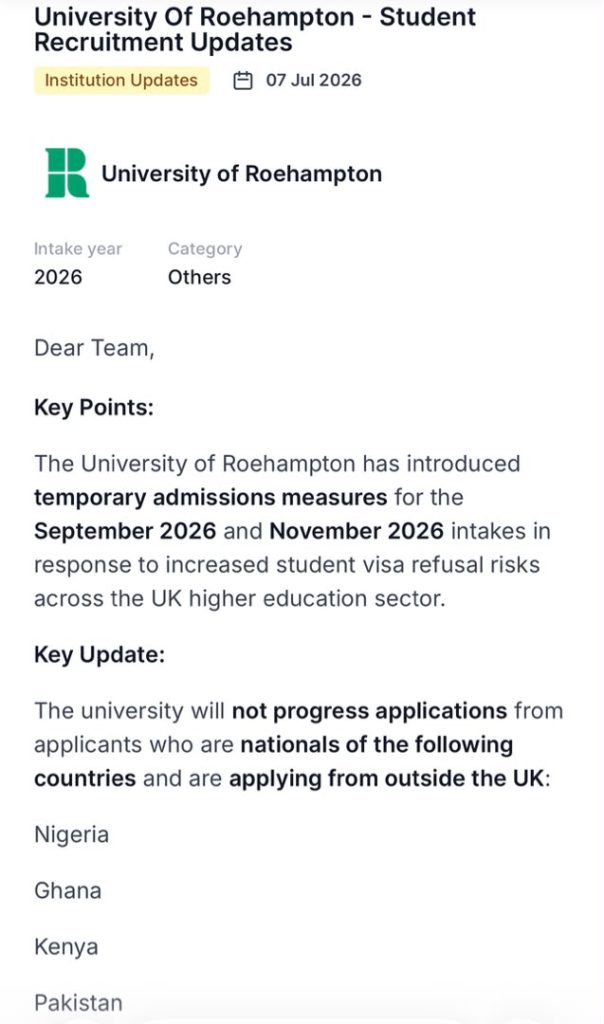
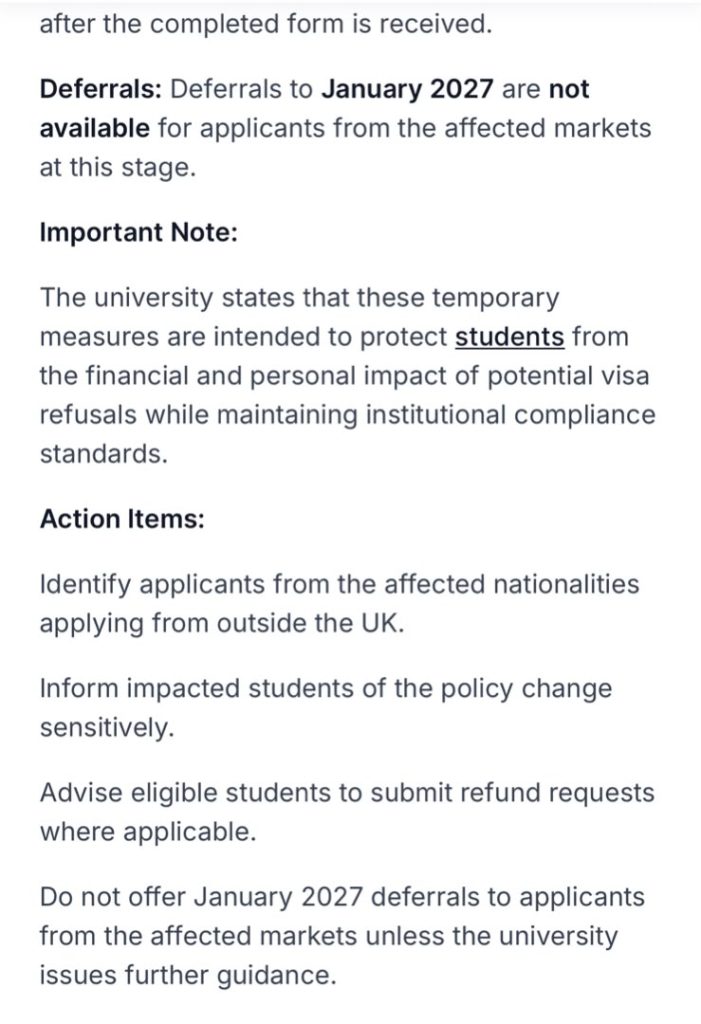
Communication from the University of Roehampton regarding affected applicants.
2. University of Sunderland
The University of Sunderland has also introduced restrictions affecting certain Sub-Saharan African applicants for the upcoming 2026 intakes. According to communication received by affected applicants, the measures affect specific courses and may also apply to applicants with longer study gaps on certain programmes.
Key points include:
- Certain courses have been affected.
- Some applicants may have their applications withdrawn.
- Restrictions can extend to applicants at the CAS issuance stage.
- Deferrals or programme changes may not be available to affected applicants.
- Students should follow the university’s instructions regarding refunds and next steps.
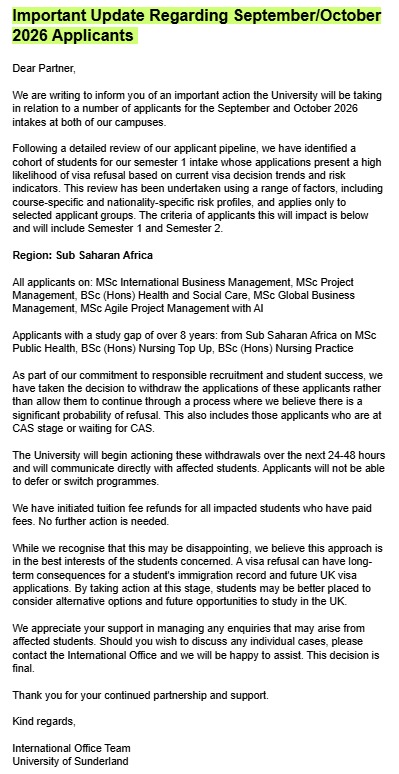
These university-specific decisions demonstrate why students should check the latest position with their chosen institution rather than relying on general information about UK universities stopping sponsorship for Nigerian students.
Does This Mean UK Universities Have Stopped Accepting Nigerian Students?
No.
This distinction is extremely important. The recent restrictions by individual institutions should not be interpreted as a UK-wide ban on Nigerian students. The UK continues to operate the Student visa route, and eligible students can still seek sponsorship from licensed institutions. What is changing is the level of scrutiny universities are applying to international recruitment. As universities work to meet stricter compliance requirements, some may become more selective about the applications they accept, the courses they recruit for, the countries they recruit from, or the students they issue CAS to. Therefore, if one university has stopped accepting your application, it does not necessarily mean that your plans to study in the UK are over.
What Should You Do If Your University Withdraws Your Application?
If you are affected by a UK university sponsorship restriction, your next step should depend on exactly what the university has communicated to you.
1. Confirm What Has Changed
Check whether your application, offer, or CAS request has been withdrawn, paused or refused. These situations are different and may require different next steps.
2. Check Your Refund and Deferral Options
If you have paid a tuition deposit, check the university’s refund policy and whether you are eligible to defer to another intake. Do not assume that every university follows the same process.
3. Review Your Application
If you decide to apply elsewhere, review your academic documents, financial documents, study history, and other supporting information carefully.
4. Explore Alternative Universities
If your preferred university is no longer accepting your application, there may still be UK universities accepting Nigerian students. However, don’t choose another institution simply because applications are open. Check its current sponsorship status, course availability, tuition fees, deposit requirements, and intake before proceeding.
Are There Still UK Universities Accepting Nigerian Students?
Yes.
The current situation should not be interpreted as every UK university withdrawing sponsorship from Nigerian students. There are still UK universities accepting Nigerian students, but availability can vary by university, course, and intake.
Before applying or paying a deposit, confirm:
- Whether the university is currently accepting applications from Nigeria;
- Whether your chosen course is open to international applicants;
- Whether CAS requests are being processed;
- The required tuition deposit;
- The refund policy; and
- Any additional screening requirements.
University policies can change quickly, so always verify the latest information before making financial commitments.
What This Means for Your UK Study Plans
The UK study landscape is becoming more compliance-focused, and universities are paying closer attention to the international students they recruit and sponsor. For Nigerian students, choosing a university now involves more than simply looking at tuition fees or whether applications are open. You need to consider whether the university is currently recruiting from Nigeria, whether your course is available, whether you meet its requirements, and whether you can successfully complete the university’s application and visa process. If your application has been affected by UK universities stopping sponsorship for Nigerian students, there may still be alternative options available.
At Negxy Concept Limited, our counsellors can help you review your situation, identify suitable UK universities accepting Nigerian students, and understand the next steps for your application.
Speak with a Negxy Counsellor to discuss your options and find the right next step for your UK study plans.
Frequently Asked Questions
Some universities are becoming more cautious about international recruitment as they face stricter UKVI sponsor compliance requirements and greater scrutiny of visa refusal, enrolment, and course completion rates. However, individual university decisions should not be treated as a UK-wide policy.
Yes. Nigerian students can still apply to eligible UK institutions that are accepting applications and are licensed to sponsor students under the Student Route.
There are still UK universities accepting Nigerian students, but availability varies by institution, course, and intake. Students should confirm current recruitment and CAS policies before applying.
Yes. Eligible Nigerian students can still apply for a UK Student visa if they meet the relevant requirements and receive sponsorship from an eligible institution. A restriction imposed by one university does not automatically prevent a student from applying through another eligible sponsor.
The next steps depend on the university’s policy. You may be offered a refund, asked to submit a new application, or, in some cases, given an option to defer. Check your university’s communication carefully before taking further action.